Saturday, 25 February 2012

Some Amsterdam shenanigans

Racy, arty, foodie, friendly. Amsterdam is an incredible city. I love it. It makes me feel excited just as much as it makes me feel at home. I can't wait to return. 

I've been twice in the last three months, which may seem a bit much given there are many other great european cities to explore, but there's something about this one that's really got under my skin.

The city is bursting with culture and history, it's packed with friendly residents, it's hot on design, style and creativity, and good food and enjoying life are part of the very fabric of the city. What's not to love.

This particular trip saw Mathew and I visit with our friends Graeme and Laura. Together we formed Team Food and made eating, browsing and living the Amsterdam life our mission for four days. 

We ate in all kinds of places - cafes and restaurants in the cool Nine Streets, MOMO for trendy Japanese fusion food and a cocktail fueled lunch, the Mediterranean-middle eastern mash up that is Bazar, grazing over several late afternoon hours in its sparkly, Moorish setting, dinner in Cau, an Argentinian steakhouse worth buying shares in if you can get hold of them, and the organic fine dining oasis that is Restaurant de Kas.
I had, an amazing time - deeply pleasurable, it couldn't have been better.

We were sure to squeeze in some Dutch culinary tradition. Veal croquettes are to the Dutch what fish and chips are to us Brits. We ate some light, crispy skinned beauties in the Nine Streets, a quirky, thriving independent area of high end boutiques, galleries, coffee shops, design stores and restaurants all bound by parallel running canals.  Expect a version of this classic snack on the blog soon. 

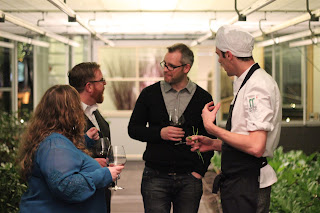
Saturday night saw the visit to Restaurant De Kas. Set up by Michelin starred Dutch chef, Gert Jan Hageman, the restaurant is part housed in what was once Amsterdams old municipal nursery. The site and interior have been transformed into a slick, earthy, expansive restaurant, and we were lucky enough to secure the chefs table in the heart of the kitchen on the night we visited.  

The restaurant serves the food it grows on site, so seasonality is a big focus, and the menu completely changes once a week. It's testament to the skill of the kitchen team that they can manage these changes so efficiently and consistently produce fantastic food - and the kitchen was as calm as could be in doing so.

This meal was especially exciting because whilst we knew we were having the eight course tasting menu with matched wines, we had no say at all in it's contents, and no idea what was to come until it was presented to us at the table. A thrilling dinner and one that delighted at every dish.

Food highlights included:
  • Pickled candy beetroot with holy basil and langoustine
  • Black pudding with piccalilli and a hollow potato puff
  • Oysters with foaming hollandaise and saffron boullion
  • Crisp walnuts (cooked in sugar before being deep fried) with Stilton and braised chicory
  • Sticky braised veal with parsnip and a deliciously woody wild mushroom risotto
Following the meal we were given a tour of the greenhouses by the head chef, Bas, a man intensely devoted to creating delicious food and sharing his enthusiasm for the de Kas concept with his guests, his passion was infectious.

The meal was wonderful, as was the attentive service we received from our sommelier and maitre d', Fabienne (who introduced us to a most beautiful chenin blanc from Vouvray), and we felt especially looked after at being given a gift in the shape of a big bag of the incredible walnuts and Stilton - a delicious snack and parting gift. Next time we're in the city we'll certainly return.


Sunday night was just as vibrant as Saturday night in the city, we had a taste for steak and after a little online research decided to chance a visit to Cau.  A cool, buzzing venue with attentive staff, fabulous wines and even better food. 

There's little I can say about this meal, because quite simply, you haven't eaten steak until you've eaten steak at Cau. Steakgasm. That is all. 

I'm hoping for many more visits and great times to come in Amsterdam, but as for Team Food, next stop it's Barcelona...

Sunday, 12 February 2012

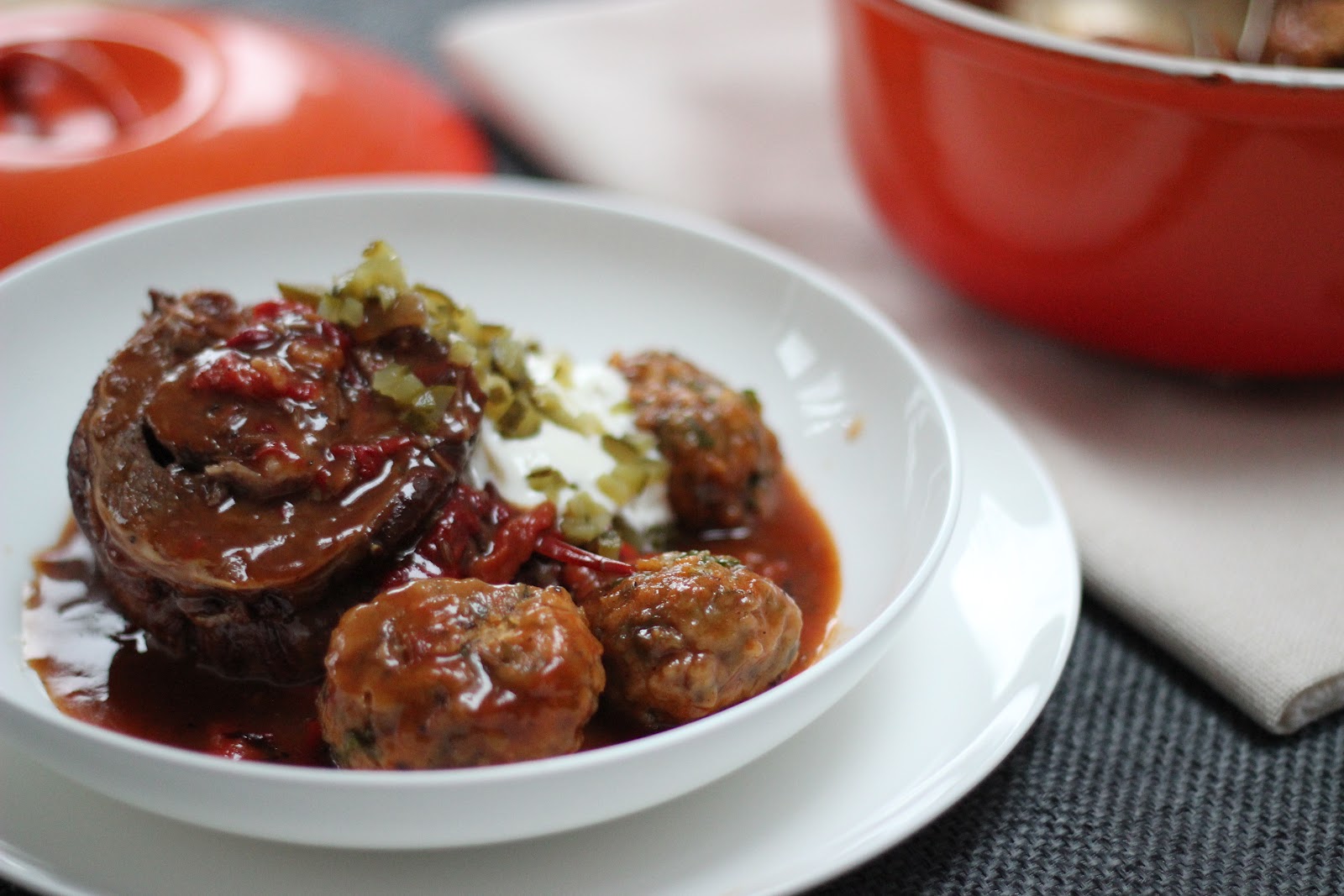
Smoky rosé veal goulash with caraway seed and dill dumplings

If you want hairs on your chest, this is the dish for you. Ideal for chilly weather and hungry guests. It may not have the finesse required for a dinner party, but for a boozy Sunday lunch with family and friends it's perfect - providing just the right amount of comfort and being rather easy to pull off and impress with. 

I ordered a mixed box of beautiful rosé veal from Heaves Farm Veal  at the end of last year and received a whole host of interesting and tasty cuts. Fillet steaks perfect for wiener schnitzel, shins for osso bucco, mince galore to make gently cooked ragu, braising cuts that I used for an Italian style pie (link here if you fancy a look http://bit.ly/uwuH4L), a topside that melted perfectly in a marsarla wine and porcini mushroom sauce, and a whole load more besides. 

I've still got lots of it to use (look out for the schnitzel and osso bucco complete with saffron Milanese soon) and when trying to squeeze something into the freezer in the week was reminded about the brisket. 

Brisket is from a really hard working part of the beast and so needs very gentle and slow cooking to break down the connective tissues and make the meat melt. It has a great flavour and takes on other flavours very well indeed, so lends itself to bold, slow cooked dishes like goulash.

After sampling some rather sorry dumplings in Prague alongside a goulash, I realised dumplings are ideal for adulterating - they take on other flavours perfectly so can act as a great complement to the dish you serve them with. Here I packed them with caraway seeds and dill - flavours that a goulash I ate in Vienna last year was filled with. I hope you enjoy it as much as we did. 

For four:
For the goulash - 
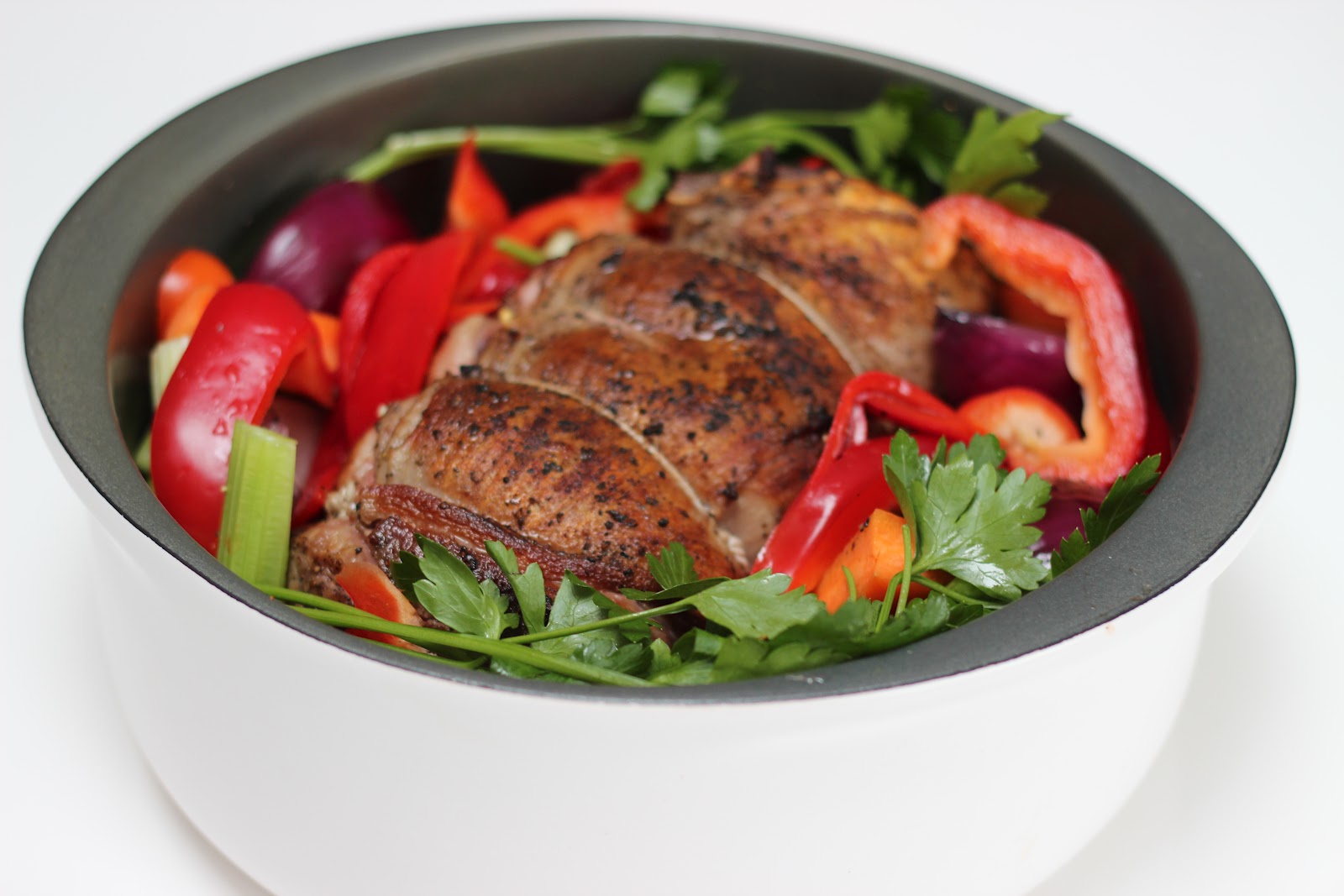
A brisket around 1.4k in weight, coated in salt and pepper and seared on all sides in a very hot pan with some groundnut oil until golden 
2 red peppers, cut into strips
4 red peppers from a jar, and around 100mls of the juice they're held in
1 large carrot, peeled and cut into batons
2 celery stalks, cleaned and cut into batons
2 red onions, peeled and quartered
3 heaped tsp smoked paprika
600mls red wine
4 slices smoked streaky bacon
300mls water
2 tablespoons caraway seeds
2 tablespoons cornflour mixed into a paste with cold water 

For the dumplings - 
1.5 tablespoons caraway seeds
50g shredded suet - I use a light suet which works just fine
100g self raising flour
A handful each fresh dill and parsley, finely chopped
Enough cold water to form a firm dough
Quarter of a teaspoon smoked paprika  
Sea salt and black pepper

To serve - 
2 minced gherkins
Sour cream

Method:
- Preheat your oven to 220 degrees
- Into a casserole dish combine all the goulash ingredients apart from the cornflour mix and place into the oven for 20 minutes at 220, then reduce the heat to 165 for 2.5 hours
- Towards the end of the cooking, mix in a large bowl all the dumpling dry mix until combined, then add enough water to form a firm dough. Form the dumplings into small balls, you will get around 9, then set aside
- When the time is up on the goulash, remove from the oven and remove the brisket and set aside for 15 minutes to rest
- Whilst that's happening strain the liquor, catching it in another casserole pot or saucepan that can go on the hob and which has a lid. Out of the vegetables in the strainer keep the peppers, carrots and celery and put these into the strained liquor
- Heat on a gentle heat and stir in the cornflour until you get to a consistency of sauce that will coat the back of a spoon
- As this cooks a little, take the brisket and cut into large slices, then place it into the sauce so it's submerged 
- The goulash on the hob should only be gently simmering on a low heat, and once the veal is back in it place the dumplings on top. Clamp the lid on and be very patient and don't peek until it's done - which will take 20 minutes
- Serve with a big glass of your favourite

Sunday, 5 February 2012

Poulet Basque

I'm lucky to have spent a fair amount of time in San Sebastian, the fabulous Basque capital, but that's not where I discovered this classic dish. It was actually introduced to me by my dad, who is without doubt the reason I am as adoring of food and cooking as I am. 

My mum and dad have lived in France for the last decade after deciding that it's never too late to start again. Leaving England and the home they'd lived in for 25 years was a big gamble, to take my youngest brother (10 years old at the time) and to move to a country where they didn't speak the language was a scary, upsetting and exhilarating time. 

It's this kind of bravery that is at the heart of a philosophy very personal to me and my life - the possibility of change through action. The idea that if you aren't happy with something in your life that you have the power to try to make things different, to make things better. 

They bought Les Rochers, a small hotel in south west France, in a conservation village with incredible views into the valleys and of the mountains that they're perched on the side of. It's a special place not only because their balls and hard work have created a hotel and home that is beautiful, artistic and welcoming, or because the surrounding landscapes are breathtaking, but because it's full of so many great memories and whenever we visit they come flooding back.

Les Rochers has been  privvy to a few parties over the years (including my wedding), lots of drinking and even more great eating (an essential in our family) and over the years I've been inspired by my dads fantastic cooking to recreate and adapt many dishes served in the restaurant. 

Poulet Basque (as you'll find it named on the menu) always delights customers and without fail leaves me wanting seconds. The flavours are as vibrant as the colours of the dish, and in this version I like to use chicken legs for extra flavour, and to cook it all in one pot, leaving me time to do something else (like playing Scrabble, which is seen as a competitive sport at the hotel and undertaken at least twice a day when I visit). 

For four:
4 chicken legs, skin on and seasoned with salt and pepper on both sides
2 red onions, finely sliced
3 picante chorizo cooking sausages, peeled and cut into batons lengthways

1 each of red, orange and yellow pepper, cut into strips
1 red pepper from a jar, sliced in the same way
Around 30 cherry / small tomatoes (sorry, I didn't weigh them, just counted them) - leave 10 raw
1 lemon, quartered
A couple of handfuls pitted black olives
600mls dry white wine
200mls water
100mls pasatta

2 cloves garlic, sliced
3 handfuls raw basmatti rice (probably inauthentic but means you don't need to cook it or another accompaniment separately later)
Olive oil for cooking
2 tsp smoked paprika
Sea salt and black pepper

Method:
- Preheat your oven to 180 degrees

- Lightly coat your peppers in olive oil and the tomatoes, pop them in separate containers into the oven for 1hr. Shake occasionally, you're looking for them to soften and lightly char around the edges 
- When they're done, remove them from the oven and set aside
- Heat a dry frying pan on a high heat and after a minute or two add the chorizo (and either turn your extractor fan on full blast or open a door, as it creates some smoke). Turn the batons to get them darkening on all sides, then remove and set aside
- Into the hot chorizo fat place the chicken legs, skin side down. Cook on both sides until you've got them a light golden colour, then remove and set aside and add the sliced onions to the fat. Cook on a slightly lower heat for around 5 minutes, then add the garlic and paprika and cook for a further minute before adding the wine, water and pasatta. Bring all this to a simmer and then remove from the heat
- Into a large oven proof dish add the tomatoes, fresh tomatoes, roasted peppers and pepper from a jar, black olives, onions and garlic in the wine mixture, then the basmatti rice and stir it all together to combine, then lay the chorizo batons over the top and finally push the chicken legs into the mix (skin side up)
- Cover (lid or foil tightly wrapped) and cook at 180 degrees for 1 hour, the dish should be bubbling and the chicken juices running clear, pop it back in briefly if you need a bit longer
- Serve, giving a squeeze of lemon before eating

Camembert, black olive and apricot tart

The whole Camembert was sat in the fridge, waiting to be eaten as I was waiting for inspiration.

Normally polishing off cheeses if a forte of mine, and my usual trick with Camembert is to bake it. Doing this is especially good after studding it with black garlic slivers, a coating of black pepper and a splash of white vino. But there’s only so much hot molten cheese that a girl can cope with, so I found myself searching for something different to do with it that would last longer than a single sitting.

A tart seemed ideal, and the trio of flavours balance one another very well indeed. There's real harmony between the salty olives, sweet bursts of apricot and the distinctive French soft cheese. And their combination is even better the day after baking (though letting it make it that far was a bit of a challenge). 

The overall effect is pretty slinky and quite soft set, which feels extra luxurious when eaten. That said, I made the tart pretty rustic – olives just cut in half, finely diced apricot and the Camembert (including the rind) cut into long slices, but you could make the tart more refined if you wanted.

Do this simply by pureeing the apricots and adding them to the cream and eggs mix along with very finely minced black olives, and remove the rind from the cheese and dice it.

Makes one 9” tart
4 egg yolks and 2 whole eggs
300mls single cream
1 whole Camembert, cut into long strips
120g dried apricots, finely diced
20 stoned black olives (not that have been kept in oil) split lengthways
1 packet of ready to roll short crust pastry (because lifes too short)
A generous scrunch of black pepper
Unsalted butter for greasing
Plain flour for dusting
Baking beans / rice
9” tart case

Method:
Preheat your oven to 200 degrees
Lightly grease your tart case
Lightly dust a work surface with plain flour, and roll out the pastry until it’s around 4mm thick
Drape the pastry inside the case, gently letting it settle into the corners and not stretching the pastry, use your knuckles to press the pastry into the corners very carefully, this is important in having a well shaped base that will hold all the filling
Trim the excess top edges of the pastry, I like to leave a little extra to allow for shrinkage in the oven, when its done you can simply shave off the excess if its not shrunk, using a very sharp knife to do so. Don’t prick the base of the case
Place baking paper into the case and fill with baking beans or rice and pop into the oven for 25 minutes
Whilst that’s happening, whisk together the eggs, cream and black pepper
Remove the case from the oven and take out the baking paper that’s holding all the beans / rice, put the case back into the oven for 5 minutes
Remove from the oven and pour a little of the egg mix into the base, then lay as much camembert as you can lengthways across the tart, top with the olives and apricots, then the remaining Camembert, and finally pour over the rest of the egg mixture
Carefully place into the oven for 25 minutes. Half way through cooking remove the tart and use a fork to poke any of the exposed rinds back under the surface
When the time is up (and don’t worry if the tart has inflated a bit in the oven, it will settle back down) give it a little shake and if the centre wobbles like it’s very wet then put it back in for five minutes. You’re looking for a little movement in the centre but not much