Monday, 22 August 2011

Crab cups

I so wanted crab rangoons tonight (who doesn't take pleasure in deep fried trashiness from time to time?) but after lots of hard work at the gym recently I'd have felt just too guilty if I'd indulged in those naughty parcels of tastiness.

But there'll be no tears before bedtime for me, because luckily I was surfing Tastespotting and up popped a great idea and dish substitute - I could get my crab in crispy coating fix without some of the fat induced guilt.

Using gyoza wrappers as the casing, they're simply placed into a lightly greased muffin tin then sprayed with a little oil and baked until crisp. Once done you can fill them full of all kinds of things - I chose a fresh and crunchy mix of crab meat, spring onion, minced ginger, lime juice, quark cheese, mint leaves, bean shoots and Japanese pepper.

The best thing about these is how easy they are to do, and I cant stress quite how simple they are - they were made and devoured within just 30 minutes. Plus they look so cute, so would be perfect as canapes at a dinner or drinks party - bake the skins off beforehand and pile them full of lots of different fillings before people come round - easy and impressive.

For 9 crab cups
100g white crab meat
3 tablespoons quark cheese
Juice of half a lime
A small pinch of chopped fresh coriander
Half a teaspoon minced ginger
1 spring onion
A handful of fresh bean sprouts 
9 gyoza skins
Spray cooking oil
Japanese pepper
A scrunch of sea salt

Method
- Preheat your oven to 180 degrees
- Spray your muffin tin and place in the gyoza wrappers into the indentations, then spray the gyoza skins with the oil and sprinkle them with salt. Bake until turning golden - this should take around 10 minutes)
- Combine the remaining ingredients (apart from the Japanese pepper and mint leaves) in a bowl and set aside
- Remove the shells from the oven once done and leave to cool for 5 minutes
- Pile the filling into the shells and top with the mint leaves and Japanese pepper
- Job done

Sunday, 21 August 2011

Vietnamese style noodle salad with crab and candied star anise peanuts

It certainly doesn't feel like the summer's over round my gaff. At 24 degrees it's just delightful in the garden this afternoon. Perfect place for a lunch that allows me to indulge my love of Vietnamese food.

As a hardcore noodle addict I use to worry about the summer and my noodle eating - what would I do when it got too hot to indulge in broth based slinky noodle creations? How would I get my much needed fix? Well, the Vietnamese do it with aplomb, and their bun salad (no baked goods included) allows me to enjoy my much loved noodles nice and chilled and super tasty.

This isn't a strictly authentic version but it is very close, and if you're into all things oriental then you'll hopefully love it all the same.

The candied nuts are really delicious. I'm off chilies still but using the star anise powder (or five spice if you can't find it) really does bring the Asian vibe to them deliciously. The quantities in this recipe will make more than you need for the dish, but they make a great snack to enjoy with a beer so won't go to waste.

For two:
As many medium thickness rice noodles as you'll eat (I use one broad sheet for two here) made up as per the pack instructions and sat waiting in cold water
200g white crab meat
2 spring onions, finely sliced
2 carrots, peeled and finely grated
A handful of mint leaves
A handful of coriander leaves
3 tablespoons palm sugar - grated
1 large knob of ginger, finely grated or minced
Juice of two limes
150g salted peanuts
Half a teaspoon ground star anise powder (and if you cant get it from your Asian supermarket then use 5 spice instead)
A generous scrunch of sea salt
30mls water
75g white sugar

Method:
- Start with the peanuts, place the nuts, sugar and water into a small pan and cook on a lowish heat. The process takes around 15 minutes - basically cook the peanuts keeping stirring them until the sugar water reduces right down and you get a granular sandy texture (as in the pic) this is normal and keep going, stirring all the time, basically they'll get darker and darker and go from being dry and sandy back to being golden and liquid. When you've got a good dark caramel colour over them add your scrunch of salt (I like salt so the double helping from the nuts and this is good, balances well with the sugar) and your star anise or five spice powder, stir through and then pour out of the pan onto a baking sheet - leave there to cool
- In a large bowl place the grated carrot, then the noodles - now combine them with your hands, pulling the noodles up and mixing the carrot through it - this salad really does need to be done by hand, much easier
- Into a bowl place the grated ginger, lime juice and palm sugar and mix with a fork. Now using your hands flake the crab meat into this mix - its also a good idea to do this because if you feel any shell you can get rid of it before eating
- Pour the crab and dressing mix over the noodles, then add the mint, coriander and spring onion and same as before, mix the ingredients together with your hands until its all combined
- Place into bowls ready for eating, top with the candied nuts and top with some extra fresh mint leaves. Devour

Monday, 8 August 2011

Sundried heritage tomato, roasted yellow courgette and taleggio galette

Perks of the job like this are something I'll definitely miss. Not many work places give you access to delicious ingredients you might otherwise find difficult to get hold of.

Before now I've had fantastic crab, fish and wines (not to mention non edible treats such as serving dishes and glam light fittings) but the second I saw the heritage tomatoes make an appearance on the menu I knew I'd have to get myself a kilo.

I love how irregular and multi coloured they are, pretty and unusual and entirely unlike anything you could buy in our supermarkets. But it aint all about good looks, they taste fantastic too.

I was supposed to make this galette over the weekend, but had a bit of an encounter with a bee sting in my mouth, resulting in anaphylaxis and stint on a drip in QMC (it's all high drama with me y'know) so tonight is the first time I've had chance.

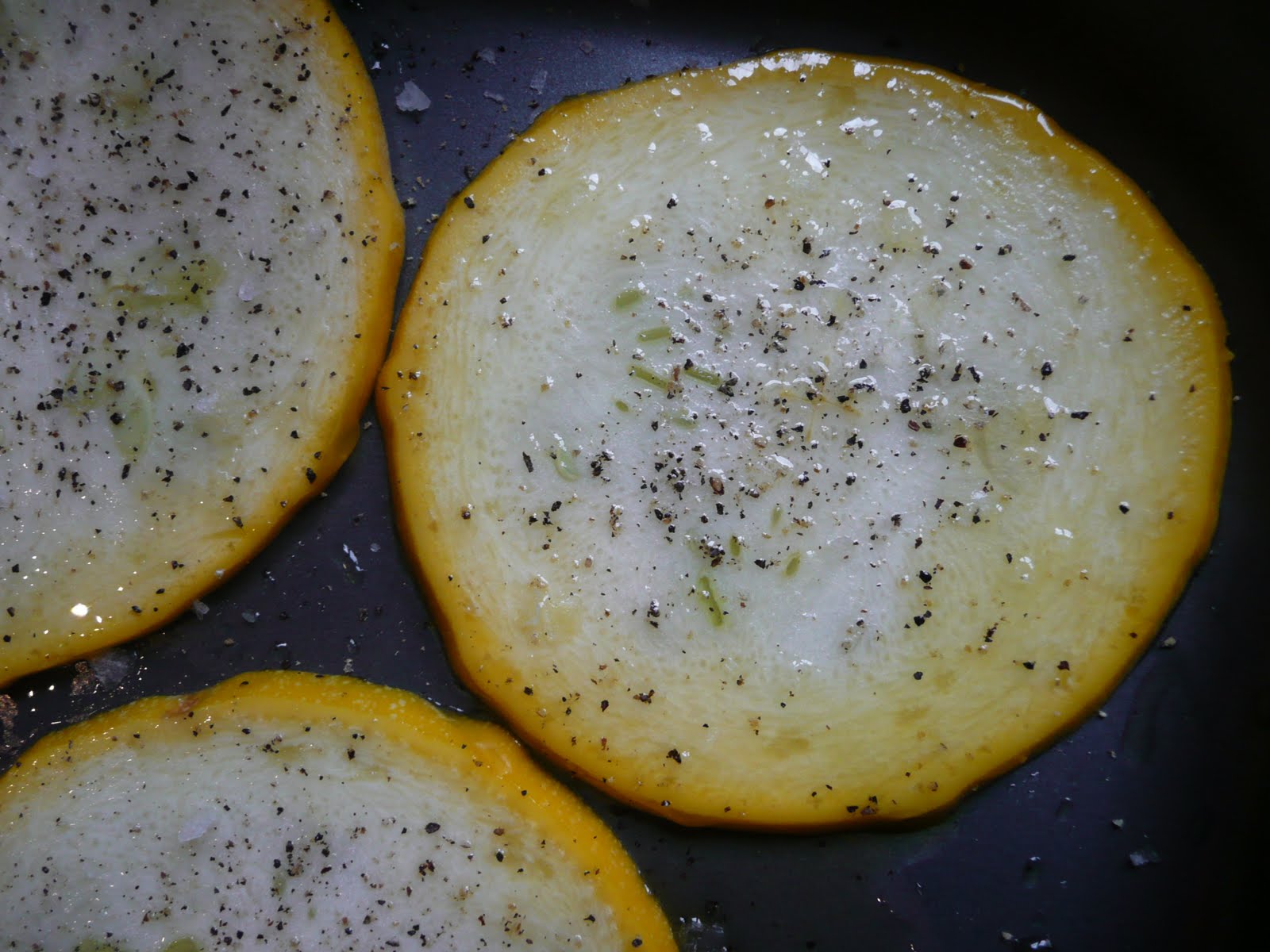
The amazing yellow globe courgettes came from my good friend Zoe, she (well, her dad) grew them and kindly passed them on to me. I've kept one to stuff it with tasty things, but the creamy yellow discs of the other two I decided would complement the sun dried tomatoes and salty taleggio cheese beautifully.

A galette seems to have a number of definitions. Sometimes made with a bread-like dough, sometimes with a pastry, the contents can be filling or savoury but the the wonderful thing about it is its rusticity. No pie dish? No problem - simply pile in the fillings and crimp up the edges. Et voila.

In fact, it's so easy you'd be able to whip one up as an impressive dinner party starter no problem. And the filling ideas are endless, expect a crab and pumpkin related combination soon...

For four:
750g heritage tomatoes
100g finely grated pecorino cheese
2 globe courgettes, sliced in rounds around 4mm thick
1 pack of shop bought shortcrust pastry - taken out of the fridge about 20 minutes before you need it
350g taleggio cheese, diced or in slices
A handful fresh marjoram
500mls extra virgin olive oil
Full fat milk for brushing the pastry with
Sea salt and black pepper
A little plain flour for dusting

Method:
Start with making the sundried tomatoes

- Cut the tomatoes up into a mixture of quarters lenghth ways and simple slices - it all depends on the haul you end up with as to what would look best - it's some variety you're after
- Preheat the oven to 100 degrees and lay the tomatoes onto a non stick baking sheet and bake for 2 hours
- Remove and place them into a bowl, add a generous scrunch of salt and grind of pepper, and then drizzle them in extra virgin olive oil - enough to cover them. Set aside (they'll keep several days under the oil if you want to make them in advance)

Now onto the galette
- Preheat your oven to 190 degrees, brush a baking sheet with olive oil and lay the sliced courgettes onto it side by side (not overlapping) you may need to do this over a few sheets to fit them all on
- Brush the tops of all the courgettes now and give a grind of black pepper (no salt as the cheese is salty enough)
- Bake in the oven for around 25 minutes or until they've started turning golden at the edges - you don't
- Just before they're ready to take out of the oven, roll out the pastry onto a lightly floured surface until its around 5mm thick - don't worry about the edges being ragged, you'll be folding them in anyway
- Take the courgettes from the oven and move them with a fish slice to a plate, then re oil the base of the baking sheet and drape the pastry onto it
- Lay the taleggio chunks or slices straight onto the pastry (leaving nearly an inch border at the sides), then top with layers of the courgettes until it's completely covered, followed by the heritage tomatoes (I chose a pattern but it really doesn't matter)
- Bring the edges in to form a crust, and then brush the pastry with milk
- Bake for 30 minutes before removing and sprinkling on the grated pecorino, then put it back into the oven for 15 minutes
- Once ready, remove from the oven, drizzle with some of the oil that the tomatoes were covered in and give a sprinkling of the marjoram and a little scrunch of salt
- Eat (chablis went beautifully but another rounded or crisp white would be great also)

Wednesday, 20 July 2011

Pan-fried scallops with white bean puree, roasted heritage beetroot and herb oil

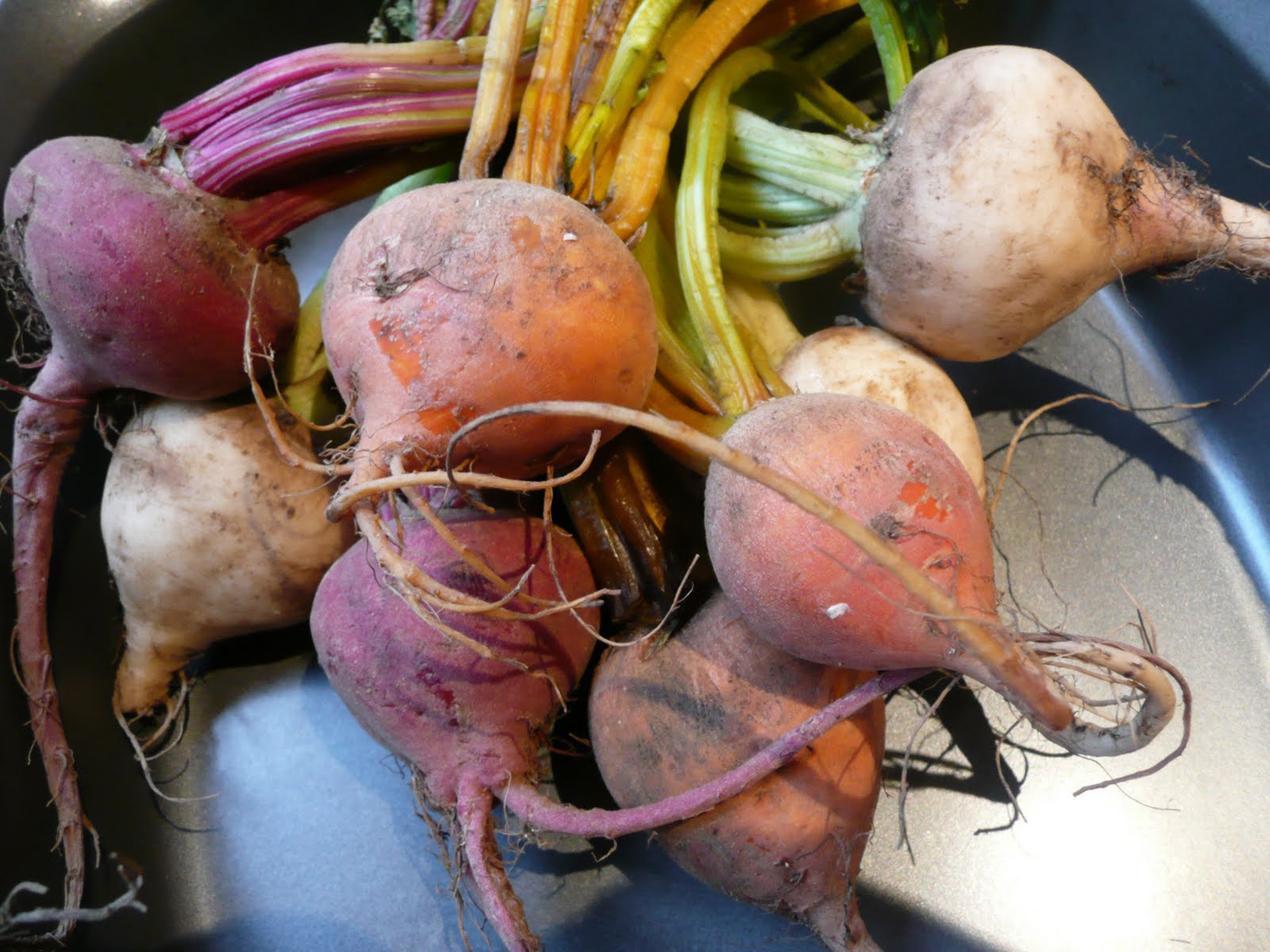
The beautiful beetroots caught my eye, jewel like in the vegetable isle, and I simply had to have them.

It's more the kind of thing you'd hear a women utter when it comes to shoes / handbags / clothes (delete as appropriate), but I get just as (and sometimes more) excited by interesting ingredients. Perhaps its a sigh of age. More likely it's my gluttony.

Today was Mathews birthday and I wanted to do something for him I've not done before. Hmmm, am sure in other households when a wife says this on her husbands birthday she means something different...but in my world it means cooking something new and interesting, and the colourful beetroots certainly tick that box.


These flavours and textures work brilliantly together - earthy, sweet, creamy and fragrant, plus the overall dish has a bit of a special feel about it in that it doesn't feel overly familiar, and the combination of ingredients are a little different.

For two:
10 scallops (preferably with roe, I had to get a mix but go for with roe if you can)
1 can canellini beans, rinsed and drained
1 can haricot beans, rinsed and drained
Good quality extra virgin olive oil
A handful each of fresh mint and basil leaves, picked from their stems
Juice of half a juicy lemon
A fresh bunch of small heritage beetroots
A small handful of watercress leaves, picked from their stems
Sea salt and black pepper
Unsalted butter and olive oil for frying

Method:
- Preheat your oven to 190 degrees. Top and tail the beetroots and rinse them to remove and dirt and place them on to a baking tray, then into the oven for 45 minutes
- Put your herbs, a generous glug of extra virgin and a scrunch of salt into a food processor, give it a squeeze of lemon juice and blitz for a minute until the herbs are as blended as they'll get
- Place the drained beans into a saucepan and cover with just enough water to cover them, put the lid on the pan
- Wash your scallops to clean them of any grit or nasty membrane bits, then set aside to keep them dry
- Put a knob of butter and a little glug of olive oil into a frying pan ready for cooking
- When you're 10 minutes off the beetroot being ready, turn the pan on to get them cooking. Once they are boiling which should take about 5 minutes, cook for a couple of minutes then drain them and pop into a food processor. Add a generous glug of extra virgin, scrunch of salt, grind of pepper and the remaining juice from the lemon, then blitz for a minute or two. Put the bean puree into a bowl and put it in the oven to keep warm
- Turn the oven off, remove the beetroot from the oven and (with your asbestos fingers!) gently rub the skins to peel off the beetroot skins. Then place them in a bowl, give a light drizzle of extra virgin and scrunch of salt and mix together, then half each with a knife. Pop the bowl into the oven just to keep them warm
- Put the frying pan with the butter onto a high heat and once the butter begins to foam place the scallops into the pan. Cook on one side for 1.5 minutes ish, then turn over, cook for a further 30 seconds then turn the heat off
- Leaving the scallops in the cooling pan (the residual pan heat will continue to cook the scallops until they are ready) get ready to plate up
- Take your plates and using a spoon drizzle on the herb oil, followed by the bean puree, then the halved beets, then the scallops dotted amongst them, and finally the watercress leaves on top.
- Eat and enjoy with a glass of something very cold and slightly dry - we had a rioja rose that worked perfectly

Sunday, 17 July 2011

Vietnamese beef pho with rice noodles

Heady, fragrant, aromatic and cleansing - pho is one of my top noodle dishes of all time.

And it's this favourite dish of mine I decided to break the blog silence with - what else would do? You see, for the last four weeks we've been a bit busy...living like hobos...out of bags and boxes...at my grandmas.

I know how it sounds, but grandma is a rather cool lady. Nifty in her little Mercedes, off out with her girlfriends from the golf club whenever she has the chance, and she likes a good glass of wine or two. Being here is really quite good fun. Plus I get to use all her antique dinnerware (see pics for a lovely duck egg blue set).

But, this isn't a move for the long term - it's temporary whilst we find our next house. This time up north in Manchester where I've been offered a fantastic new job, so I'm soon again to be Hannah-the-Planner, I can't wait.

Enough of me, on to the dish...
Given I'm still off the chillies, this is the ideal noodle dish for me to devour because that the dish itself is entirely without heat- if you want a dose of the hot stuff you simply add some shredded red chilli before eating.

There are a couple of ways you can make it; as a labour of love, or a quick hit - and both ways yield excellent results.

The long way:
If you have the time to get hold of some beef bones and oxtail, then roast, boil, skim and simmer with peppercorns, carrots, celery, peeled onions and the aromatics for several hours before clarifying with egg whites, you'll create an intense, rich, deeply flavoured stock.

The short way:
But if you're lacking time you can use a fantastic cheat ingredient instead - canned beef consomme. Its flavour still delivers the beefy taste you need and mixes well with the additional aromatics and you don't have to go through any of the pain to get there.

Perhaps one version is for weekend eating - put it on in late morning then eat it early evening, and the other version is post work - cooked and on the table within an hour.

The recipe below is the short version, which isn't completely authentic I know pho aficionados will say, but is still incredibly aromatic and delicious.

Pho for two:
10 whole star anise
1 cinnamon stick
2 lemongrass stalks, halved through their centres
1 very large thumb of ginger, cut roughly into stalks
2 teaspoons of whole peppercorns
1 heaped tablespoon sugar
2 tablespoons Thai fish sauce
2 cans beef consomme (Baxters one is very good)
800mls water
A small handful coriander
A small handful fresh mint
A small handful Thai holy basil
Rice noodles - I like the wide variety for this, however many you like for two
2 sirloin steaks
1 teaspoon sesame seeds
Black pepper - ground
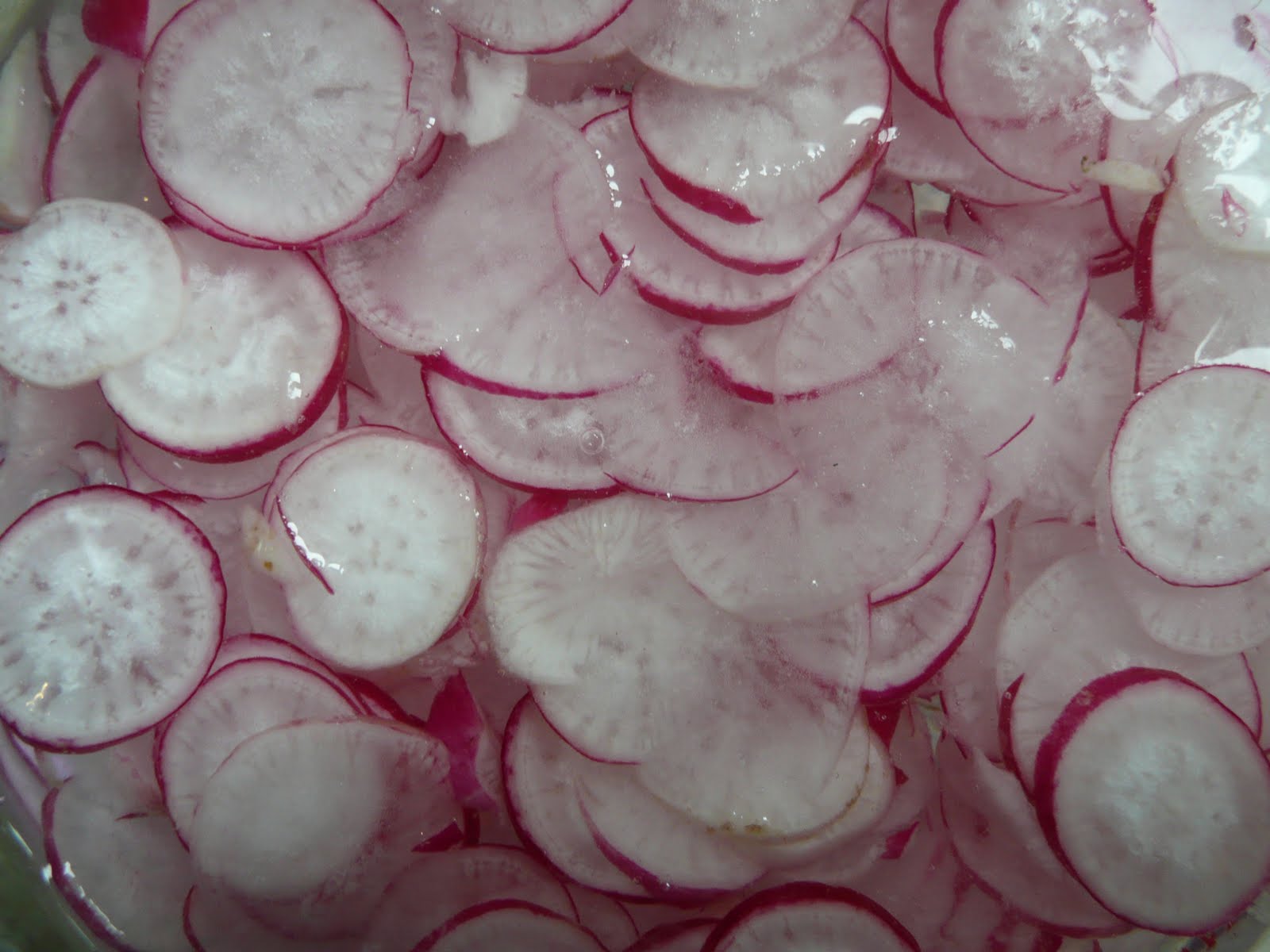
5 radishes, sliced very finely (and carefully) on a mandolin
A couple of handfuls of beansprouts
One lime, cut into quarters

Method:- In a large saucepan combine the consomme, ginger, lemongrass, cinnamon, star anise, sugar, fish sauce and lime juice. Simmer for 20-30 minutes with the lid on
- Whilst this is happening heat a dry frying pan until its very hot, and season your steaks on one side with a sprinkling of the sesame seeds, salt and black pepper before putting them seasoned side down in the pan. Now season the other sides whilst they're cooking ready for when you turn them. Cook them for 3 minutes before turning over. Cook for 3 minutes this side then remove them from the pan and set aside on a chopping board. Leave for 5 minutes before slicing thinly with a knife
- When you're around 10 minutes from the pho being ready, cook your rice noodles as per the pack instructions, by the time the water has boiled and they've cooked you should have both things ready at the same time
- Strain the noodles and separate them into two large pre-warmed bowls
- Strain the pho and all its contents through a sieve into another saucepan, then pick out a few of the star anise and the ginger from the colander, and put them back into the saucepan with the liquor (I like to do this for decoration, they shouldn't be eaten)
- Add the radishes and bring it back to the boil
- Place the sliced steak over the rice noodles along with a handful each of the bean shoots, holy basil, mint and coriander, then ladle over the hot liquor

Saturday, 4 June 2011

An adventurous Scotch egg

A classic dish given an international slant, now that's what I like. This flavour fusion really tickled my taste buds, I hope it does yours too.

To surround each petite and delicate soft boiled quails egg I've used a single fresh basil leaf, Italian sausage meat - quality pork with lots of fat and fennel seeds, then encased it in a double layer (yeah baby, the double-dip technique) of my beloved Japanese panko breadcrumbs.

These are a lovely naughty little snack and would also make a great canape or pre dinner party nibble - why not serve them inside closed egg boxes for a bit of playful table theatre.

For 10 Scotch eggs:
10 quails eggs, each pierced at one end
250g panko breadcrumbs, given a scrunch of sea salt and generous grind of black pepper
3 chickens eggs, in a bowl and beaten
100g plain flour
10 large basil leaves
400g Italian sausage meat - if you cant get hold of it buy a high pork content quality sausage, remove its skins and mix into the meat by hand a tablespoon of fennel seeds
Around 1.5l oil for frying, groundnut or vegetable
Kitchen paper
Rocket leaves, Parmesan shavings and a little extra virgin olive oil to serve
Sea salt

Method:
- Taking a pin carefully pierce the more pointed end of each of the quails eggs - it's easiest to do this with a pin rather than the tip of a knife given the eggs are so small and fragile
- Fill a small pan with a couple of inches of water and bring to a light simmer, then carefully slide the eggs in and leave there for 1.45 minutes - a rather exact times I know, but they are very small and getting them to that softish boiled point means being precise
- Once they're ready remove them and empty the pan, then put them back into the pan and let it sit in the sink with the cold tap running gently into it to cool them down. Leave the eggs cooling like this for around 5 minutes
- One by one peel the eggs now. Do this on kitchen paper and basically using your palm press gently and firmly on the egg that's lying on its side until its shell just cracks (just be careful not to press too hard) now there is a crack in the shell you can peel the shell back on its very thin membrane - it's easy enough. Once you've done them all rinse them too to get rid of any shell bits
- Take your Italian sausage meat and place around a meatball sized amount in the palm of your hand, using the heel of your other hand flatten this sausage meat until you have a thinnish layer of it over your hand, now place on the basil leaf, the egg on top of that
- Now gently close your hand, effectively beginning to wrap the egg and leaf up in the meat, bring the edges together and the sides, totally sealing the egg inside. If there are any holes or gaps patch these in with a little more of the meat, finally, roll them gently between your palms like you would a meatball, making the shape as round and compact as you can. Repeat the process with all 10 and then place them in the fridge for half an hour
- When you're ready to cook them, get your production line ready with the flour in a bowl at one end, panko in a bowl at the other end and the whisked eggs in another bowl in the middle
- Go through the process of coating each first in the flour, then the egg, then the panko, then back to the egg, and into the panko once more. Repeat until all of them have been done
- Place the oil in a deep bottomed saucepan and heat it up for around 10 minutes on a medium heat, you don't want to fry the eggs on too high a heat as they'll cook too fast on the outside and wont cook the meat all the way through. To test the temperature of the oil drop a scrunch of the panko breadcrumbs into it, they should just lightly sizzle
- Cook the eggs in two or three batches so you don't crowd the pan and make them steam, cook them and turn them over if the oil doesn't cover them, cooking them until golden on all sides which should take around 8 minutes or a bit longer
- Remove and drain on kitchen paper, then serve with a simple rocket and Parmesan salad